Function Health and The Longevity Lab are not solving the same problem.
Function Health is built around access to broad lab testing. The Longevity Lab is built around interpretation of the signals you are already producing every day: wearable recovery, sleep, HRV, resting heart rate, training load, goals, and optional blood work.
Both can be useful. The key question is what you need first.
What Function Health is designed to do
Function Health positions itself as a broad annual testing membership. Its public materials describe 160+ lab tests, testing through Quest Diagnostics locations, results explanations, and retesting over time. Its FAQ says membership is $365 per year and includes advanced categories such as heart and metabolic markers, hormones and thyroid, aging markers, and more.
That is a clear value proposition: make a large lab panel easier to access and easier to understand.
For someone who wants deep blood work, that can be compelling.
What labs still do not capture
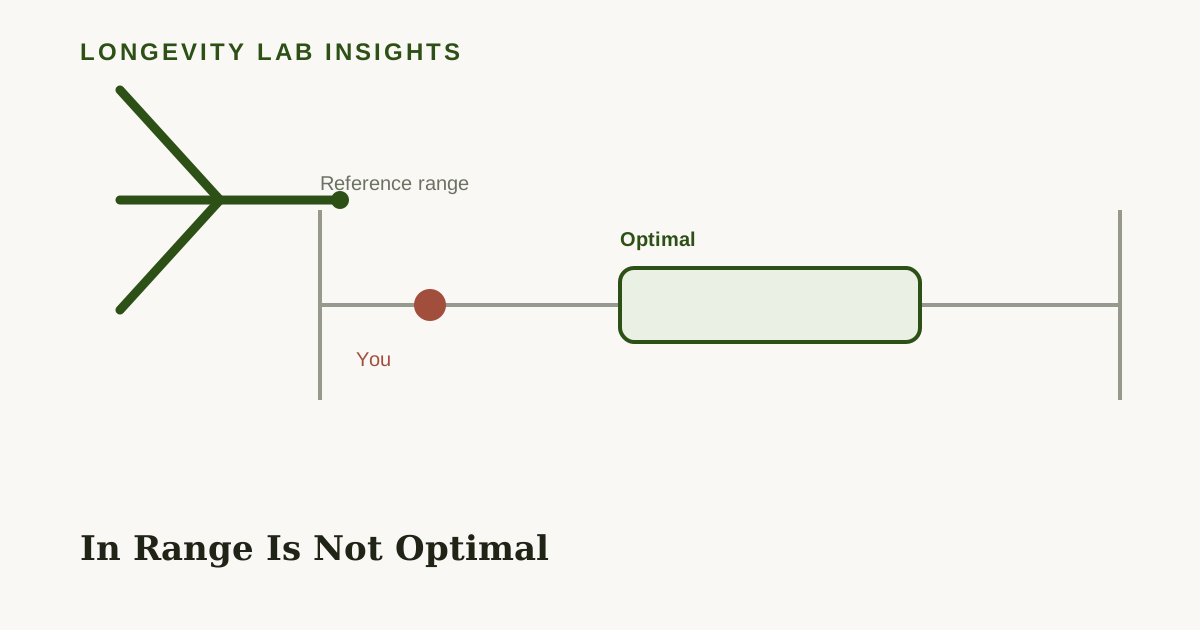
Blood work is powerful, but it is still a snapshot. It tells you what was true when the sample was collected. It does not directly show how your sleep, recovery, training, stress, and resting heart rate behaved across the last week or month.
That daily pattern matters, especially after 35-40, when the same workout, the same sleep loss, or the same stress load may not produce the same recovery response it did before.
A lab panel may help explain part of the pattern. It does not replace the pattern.
What The Longevity Lab is designed to do
The Longevity Lab starts with the wearable data you already have. You do not need blood work to begin.
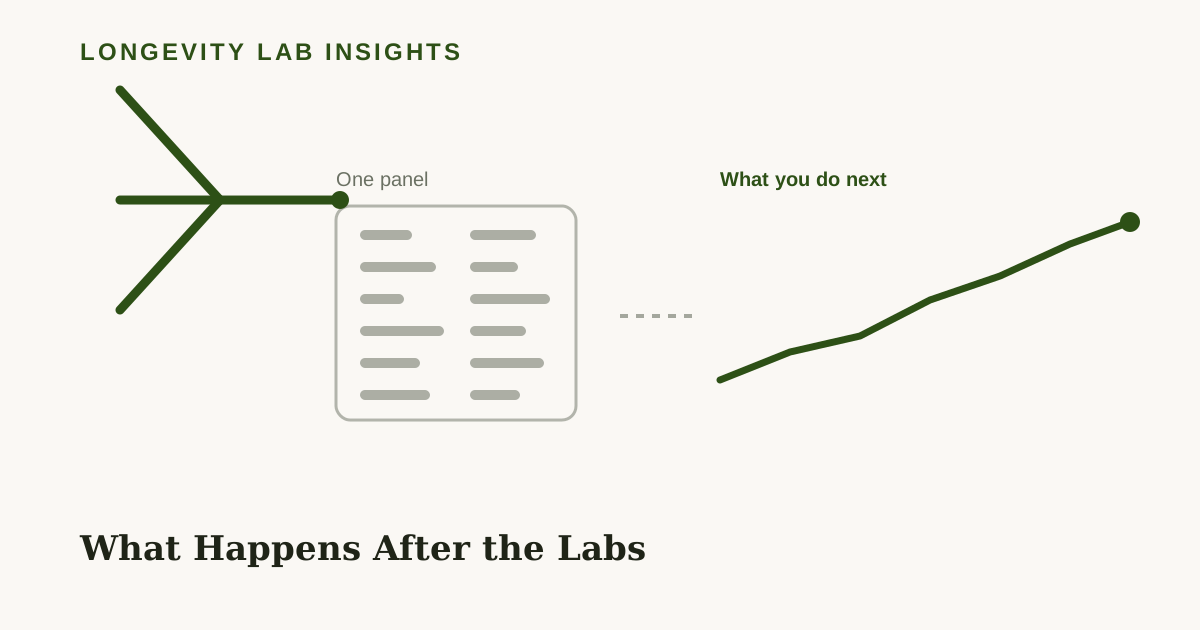
The free Baseline Audit reads your current inputs and shows what they say together and where to start. Your Longevity Protocol, the full plan for your year, builds on that. Labs can be added later to unlock deeper biomarker and biological-age context, but they are not the entry requirement.
That matters for people who are already wearing an Oura Ring, Whoop, Apple Watch, Garmin, Fitbit, or Hume Band and still asking the same question:
What am I supposed to do differently tomorrow?
The practical difference
| If your main need is... | Better starting point |
|---|---|
| Broad blood testing access | Function Health |
| Understanding recovery, sleep, HRV, resting heart rate, and training trends | The Longevity Lab |
| A yearly lab snapshot | Function Health |
| A Longevity Protocol built from the signals you already track | The Longevity Lab |
| Biomarker depth before behavior change | Function Health |
| Behavior change using the data you already have | The Longevity Lab |
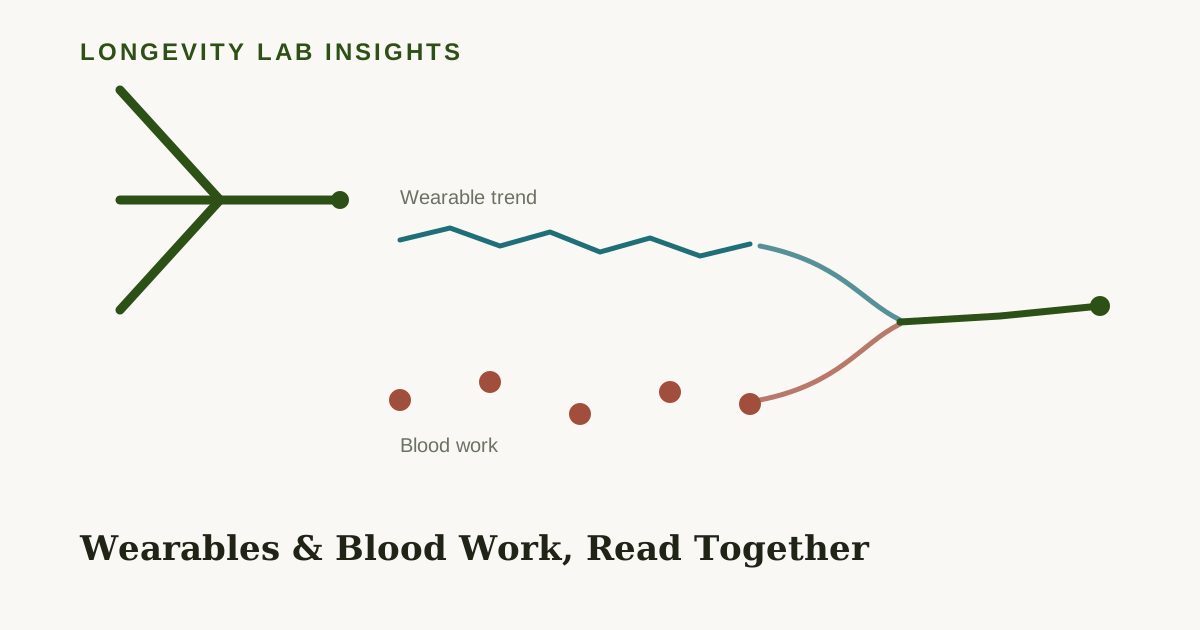
This is not a winner-take-all comparison. A person could use Function Health for labs and The Longevity Lab to interpret ongoing wearable trends around those labs.
Why this matters after 40
After 40, many people have more health data than ever: recovery numbers from a wearable, a lab report, a training log. The hard part is reading them together and knowing what to do first.
The Longevity Lab brings those pieces into one picture and one clear place to start. It is not a diagnosis, not a replacement for care, and not a magic score. It adds context, synthesis and prioritization around the information you already have, and turns it into a Longevity Protocol you can actually follow.
When to use both
Use Function Health or another lab provider if you want a broader look at biomarkers and have access to testing that fits your budget, location, and care team.
Use The Longevity Lab if you want to begin now with wearable data, understand your recovery pattern, and build your Longevity Protocol before adding more tests.
The best setup is often not labs versus wearables. It is labs plus wearables, read in context.
Start with the free audit
The Longevity Lab Baseline Audit is free and does not require a card. Bring the wearable you already own and the numbers you already have. Add blood work later if you want the deeper layer.
The next step should be practical, not performative.