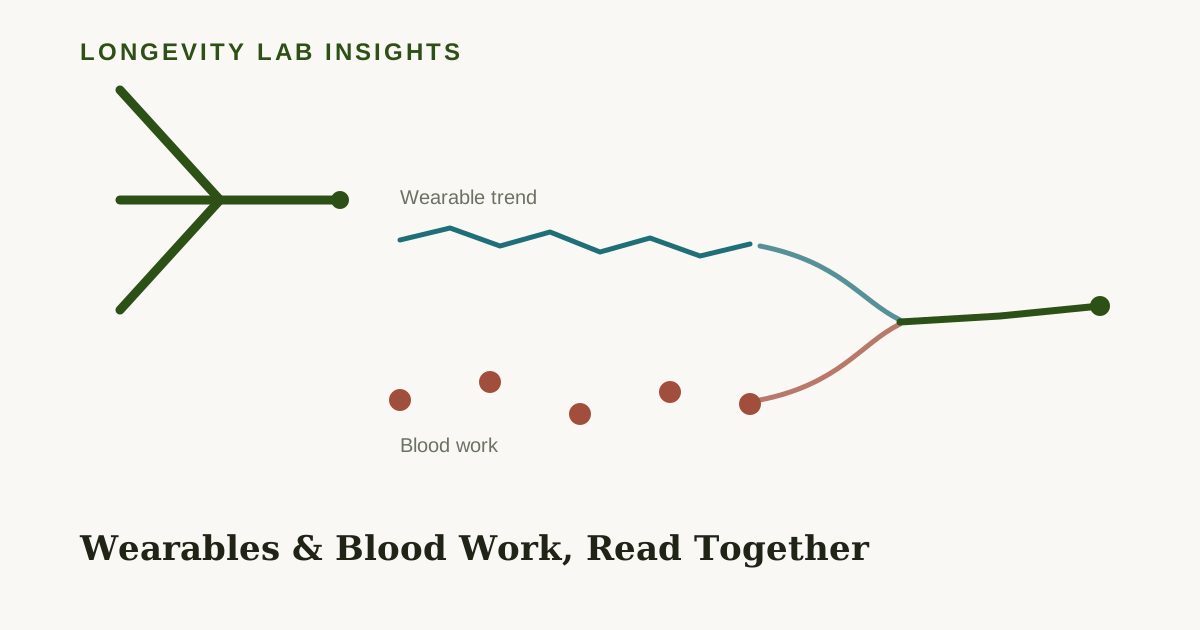
Oura is useful because it watches the pattern you live inside every day: sleep timing, resting heart rate, HRV, temperature, activity, and recovery. Blood work is useful because it gives a different kind of context: glucose, lipids, thyroid, inflammation, hormones, nutrient status, and other markers your ring cannot directly measure.
The mistake is treating either one as the whole answer.
Wearables show the trend
Wearables are strongest when they show direction over time. One low-readiness day may mean poor sleep, a late meal, travel, alcohol, illness, a hard workout, or stress. The more useful question is whether that signal keeps repeating.
That is why HRV and resting heart rate become more useful as trends than as one-day verdicts. A systematic review and meta-analysis by Jarczok and colleagues linked lower HRV with mortality risk across healthy and patient populations, but the practical consumer takeaway is not to panic over one reading. It is to notice whether the recovery pattern is improving, stable, or deteriorating.
Blood work shows a different layer
Blood work can reveal information your wearable cannot see directly. A ring may show that recovery is poor. It cannot tell you whether iron status, thyroid patterns, glucose regulation, lipid markers, inflammation, or hormone context may be part of the picture.
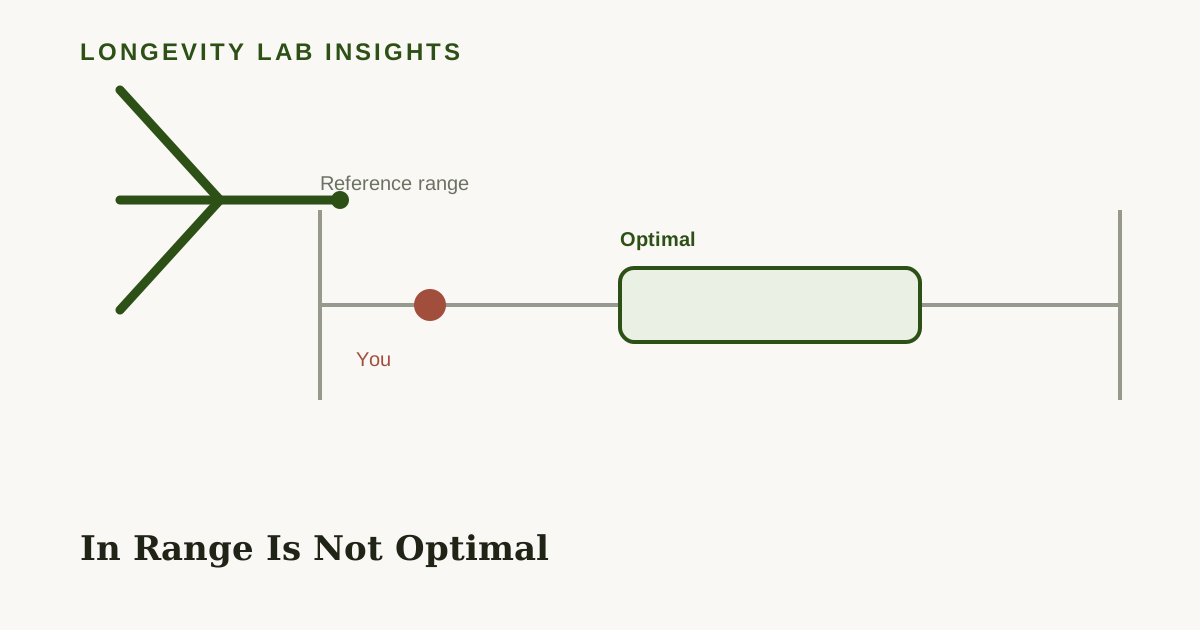
The reverse is also true. A lab panel may look generally "in range" while your wearable shows a persistent recovery problem in real life. That does not mean the wearable is diagnosing anything. It means your daily physiology may deserve context instead of dismissal.
Why Oura plus labs still needs interpretation
Oura has moved toward more data portability and lab context. Its Shareable Reports and data export tools let members review trends, and its newer health panel/lab upload direction reflects the same reality: people do not want isolated dashboards forever. They want to understand what the signals mean together.
That is the gap The Longevity Lab is built around.
The Lab does not require blood work upfront. You can start with the wearable information you already have. Labs can be added later when you want a deeper biological-age or biomarker layer.
How to read both without overreacting
Use wearable data for rhythm and timing:
- Is recovery improving or getting worse?
- Is resting heart rate drifting up?
- Is HRV suppressed across multiple days or weeks?
- Is sleep consistency changing?
- Did training load rise faster than recovery capacity?
Use blood work for biological context:
- Are glucose and insulin markers aligned with the recovery story?
- Do thyroid, iron, or inflammation markers add context?
- Are lipid markers telling a risk story not visible in the wearable?
- Are hormone or nutrient markers worth discussing with a clinician?
The useful decision does not come from one score. It comes from the pattern.
What The Longevity Lab does
The Longevity Lab brings the signal stack together into your Longevity Protocol.
That means your wearable data, goals, recovery pattern, sleep, training load, and optional labs are read together. The result is educational, not diagnostic: a clearer next step you can act on, update, and track.
Start with what you already have
You do not need a new test to begin. If you have Oura, Whoop, Apple Watch, Garmin, Fitbit, or another wearable, you already have enough signal to start a baseline.
Use blood work when you have it. Do not wait for it to begin reading the trend.
When to check in with someone
The Longevity Lab is not a medical diagnosis or a substitute for your clinician. If a wearable trend changes suddenly, if symptoms are new or severe, or if blood work is abnormal, use that information as a reason to have a more specific conversation with a qualified healthcare provider.